The bogus casting director
Two red flags in the first three messages. Right answer: keep it on the platform, ask for verifiable details, walk away when they refuse.
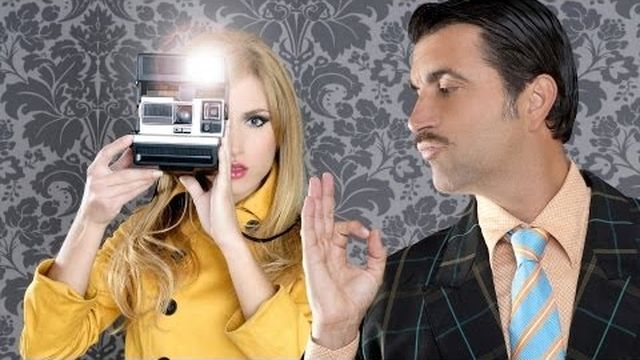
Starting out as a model is exciting, and some people take advantage of that. That is why their messages sound like an opportunity: from the fake nude photographer with an irresistible project to the agency offering you a casting from a hotmail address. Before you say yes to anything, check whether it passes the scam test: two minutes, no sign-up.
Two red flags in the first three messages. Right answer: keep it on the platform, ask for verifiable details, walk away when they refuse.
"Exclusive" parties with important people and easy money are the usual front for recruitment into prostitution. A real agency has a name, an office, a contract and a concrete job it can describe.
An agency that cannot be found outside its own messages is no agency. With no checkable name, no office and a rush, the only answer is to stay away.
Agencies earn when you earn, and never when you pay. Fees for books, courses or "activation" are the whole business, and the modelling work never comes.
Legitimate photographers have work you can see and never object to a companion or a proper studio.
Real castings happen in offices and studios during working hours, and nobody minds your friend in the waiting room.
The agency is real; the account is not. Contact the real agency through the details on its own website, never through the ones you were given.
Blackmail with images is a crime. Do not send more, do not pay, keep everything, report it, and use StopNCII.org to keep the images off the main platforms.
Any one of these is a reason to pause and check. Two together is a reason to walk away, and that is fine. You do not owe anyone a yes.
Agencies assess new faces with polaroids: plain clothes, natural light, no make-up. Nobody legitimate needs anything else to assess you.
Red flagNo client name, no landline, no office address, no website you can cross-check outside their messages.
Red flagRegistration fees, "mandatory" portfolios, courses, visa costs. Agencies earn when you earn, and never when you pay.
Red flag"The client decides tonight", "don't call the agency, it's confidential", and the moment you ask for details you are "not serious". Pressure is a technique.
Red flagReal castings happen in offices and studios, and nobody minds your friend in the waiting room.
Red flagOff the platform, on to WhatsApp or Telegram, where nothing can be reported.
Red flagExclusive parties, dinners, yachts, trips with clients, "you just have to be a hostess". Plenty of glamour, plenty of easy money and no modelling work in sight.
They reinvent themselves, but nearly every case fits one of these patterns.
Not a photographer, but works hard to look like one. What they want is to meet you and see you undressed; the photos are beside the point.
How to recognise itA company that exists only in messages. Pornography and prostitution recruitment often hide behind this front.
How to recognise itFees for registration, books, courses or exclusive castings. Real agencies make money by getting you work, not by getting you to pay.
How to recognise itA well-paid job for a great client, as long as the "casting" involves undressing for someone you know nothing about.
How to recognise itUses a real photographer's or agency's name, logo and stolen photos. The person writing to you is not the person you look up.
How to recognise itSomeone who obtained intimate photos of you, or claims to have them, threatens to publish them or send them to your family, school or agencies unless you send more photos, agree to another shoot or meet them. Sometimes they ask for money too.
How to recognise itThe details change; the sequence rarely does. Knowing the script is half the defence.
A message on a modelling site, Instagram or a forum. A fake name, borrowed or poor photos, and a title that sounds right: photographer, scout, casting director, trainer, editor. Sometimes they answer a post of yours; more often they write out of nowhere, and they write to many people at once.
They talk like the real thing. Industry words, a website made last week, a logo, screenshots of "clients" and "contracts", the name of a real brand or a real professional. Everything is designed to survive a glance and nothing is designed to survive a phone call.
A great job, a juicy contract, a well-known magazine, easy money, a career. Exciting enough to hope, vague enough not to check. Often bigger than anything a beginner would realistically be offered.
Urgency, flattery, secrecy. Photos "to see how you photograph", a private meeting. Then, if you hesitate or ask questions, insults: you are "not serious", "not professional", "wasting our time".
If it already happened
Scammers are professionals at this; you were not. Whatever happened, money, photos, a meeting that went wrong, there are concrete steps that make it better, and people who will help without judging.
What to do, step by stepMessages, profiles, phone numbers, email addresses, payment receipts, the photos they sent you. Screenshots with dates. Do not delete the conversation, however much you want to: it is the evidence every report will need.
Every serious modelling site and social network has a report button. Use it, and describe what happened. It protects the next person, it starts a paper trail, and on a well-run platform it gets the scammer removed.
Fraud, extortion with images and sexual coercion are crimes almost everywhere. Reporting is free, you can bring someone with you, and many police forces have online reporting for cybercrime. Bring your screenshots.
Report the images to the platforms where they appear; most have dedicated forms for intimate images shared without consent. Services such as StopNCII.org help prevent images from being spread further.
A friend, a parent, a partner, a teacher, a helpline. You do not have to carry it alone, and you do not have to have all the answers before you talk. People who care about you will want to help.
A veteran model scout on how real agencies find talent, and how fake ones exploit hope.
The documentary series on how a "photographer" abused hundreds of aspiring models over years, and how it finally came apart.
A non-profit that works for fair treatment and safety of models in the fashion industry.
How to support them without scaring them off, what to check with them before a casting, and how to spot the scams aimed at teenagers.
Stop Model Scams grew out of Litmind, the community for models, photographers and agencies, and out of its commitment to a safe, healthy community backed by strong security measures. What Litmind learned protecting its members is what this campaign teaches.
Visit LitmindEste sitio también está disponible en tu idioma. Leerlo en Español
Ce site existe aussi dans ta langue. Le lire en Français
Diese Seite gibt es auch in deiner Sprache. Auf Deutsch lesen
Questo sito è disponibile anche nella tua lingua. Leggilo in Italiano
Este site também está disponível no seu idioma. Ler em Português
Aquest lloc també està disponible en el teu idioma. Llegir-lo en Català
Deze site is ook beschikbaar in jouw taal. Lees hem in het Nederlands
Ta strona jest dostępna także w Twoim języku. Czytaj w języku: Polski
Этот сайт есть и на вашем языке. Читать на языке: Русский
Bu site senin dilinde de mevcut. Türkçe olarak oku
このサイトはあなたの言語でもご覧いただけます。 日本語で読む
本网站也提供你的语言版本。 用中文阅读
이 사이트는 당신의 언어로도 볼 수 있어요. 한국어로 읽기
هذا الموقع متاح أيضًا بلغتك. اقرأه بـالعربية